| Recent
and current research projects in solid mechanics
Biomechanics
- Mechanotransduction
in meniscal tissue
- Material
properties of meniscal tissue
Composites
- Failure
studies of random-fiber composites with applications to structural problems
- Concentrated
load transfer through composite panels
Computational
Mechanics
- Material
characterization of glass-fiber reinforced thermoplastic composites
at high-strain rates
- Development
of fastener systems for joining glass-fiber reinforced thermoplastic
components
- Modeling
of brittle fracture during indentation and scratching

Continuum
Mechanics
- A gradient
elasticity approach to composites
- Mechanism-based
strain gradient plasticity
Experimental
Mechanics
- High-speed
grinding of ceramics—a dynamic indentation approach
- Analysis
of bituminous pavement surface characteristics and their effects on
friction properties
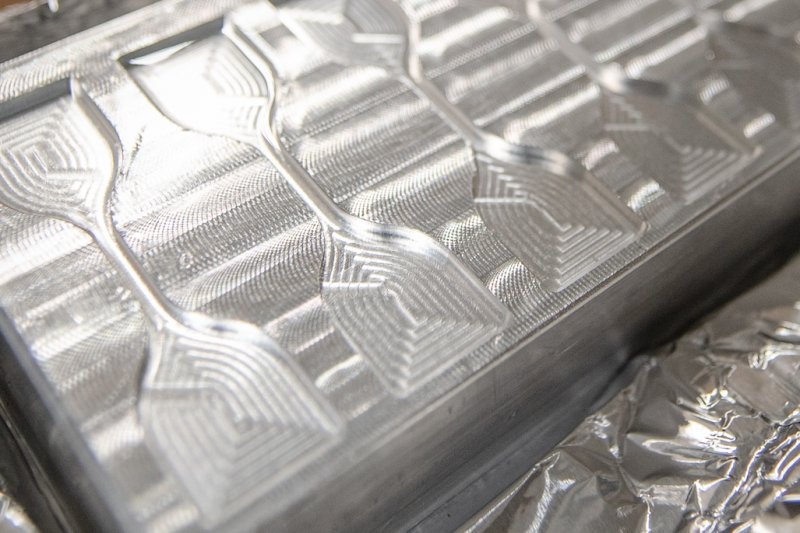
- Hydroforming
of aluminum extrusions
Fracture
Mechanics
- Snowplow
blade shape optimization
- Dynamics
fracture mechanics of metal alloys and composites
Impact/High-Strain
Rate
- High-strain-rate
characterization of metallic glasses and structural foams
- Dynamic
indentation harness tester
- Wear
characterization of structural ceramics for gun barrel liners
Microstructures
- Study
of interphase in aluminum epoxy joints
- Development
of non-brittle ceramic for high-temperature and high-strength applications
Laboratories
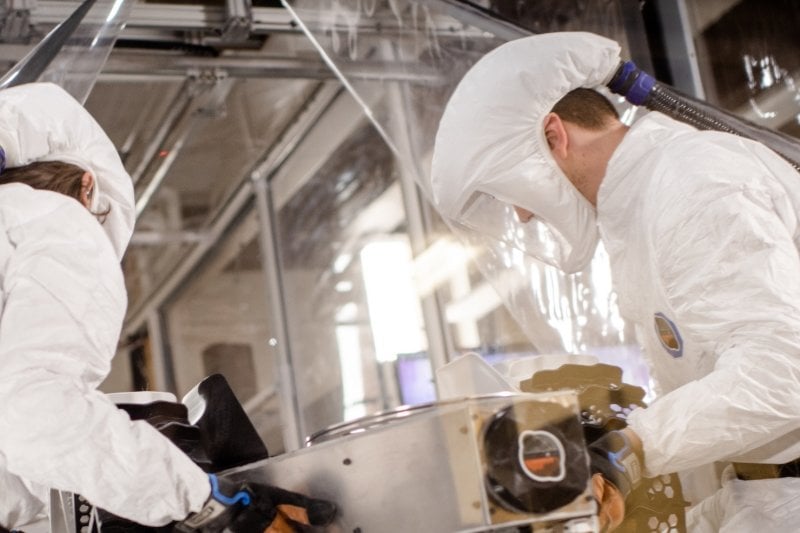
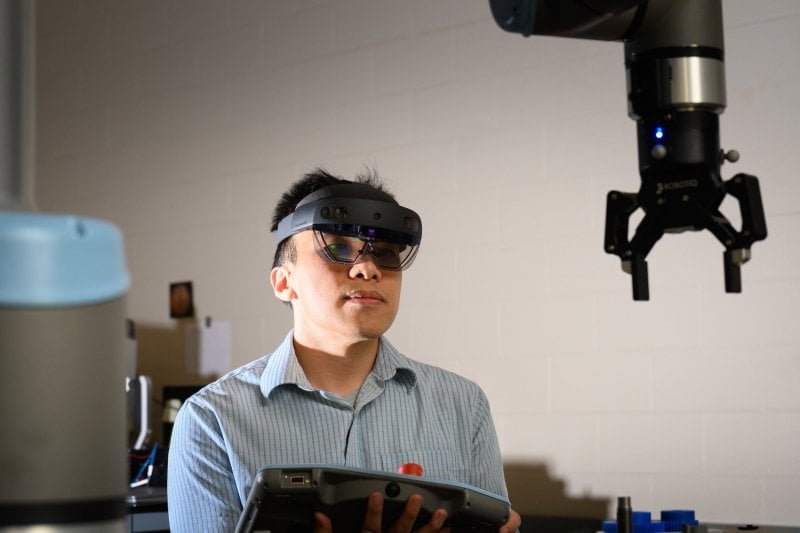
Research is conducted in laboratories, completely outfitted with the latest
technology used in industry today. They are:
- Biomechanics
Research Lab
- High
Strain Rate Lab
- Hydroforming
Lab
- Materials
Testing Lab
- Nanoindentation
Lab
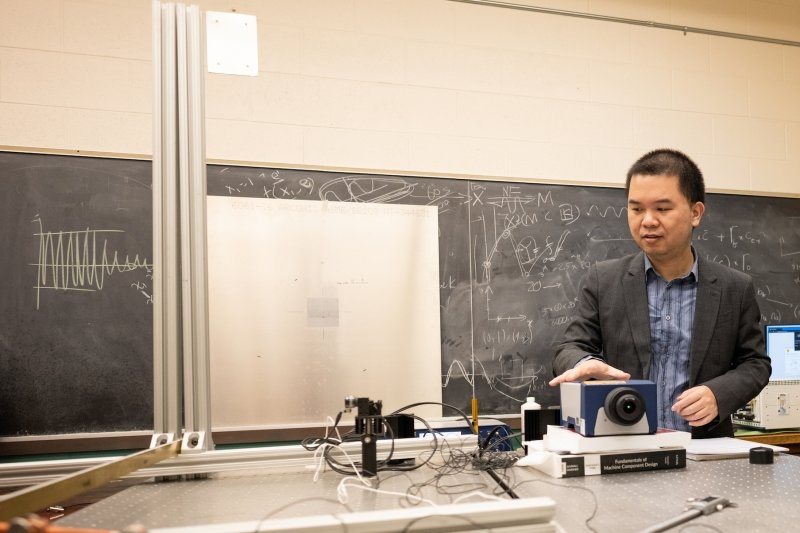
- Photomechanics
Lab
Stature
The ME-EM department is one of the largest in the nation and is the largest
in the College of Engineering at Michigan Tech. It has more than 40 full-time
faculty members. In fall 2002, 147 graduate students, which included 59
doctoral students, were enrolled in the department.
Students
at MTU work on projects funded by organizations such as the National Science
Foundation, the U.S. Environmental Protection Agency, NASA, DOE, DOD,
DoEd, the automobile industry, and the aerospace industry.
ME-EM students
work in laboratories that occupy more than 50,000 square feet of space
and house the most advanced research and computing equipment available
to date.
A $3.2-million
campaign provided a new Student Innovation Complex for the ME-EM department,
along with a number of renovated labs and new learning environments to
support the revised curriculum.
All students
are automatically considered for financial support—no additional
application forms are necessary.
ME-EM is
ranked 17th nationally in graduate student enrollment and 23rd nationally
in PhD degrees awarded (1999-2000). |